
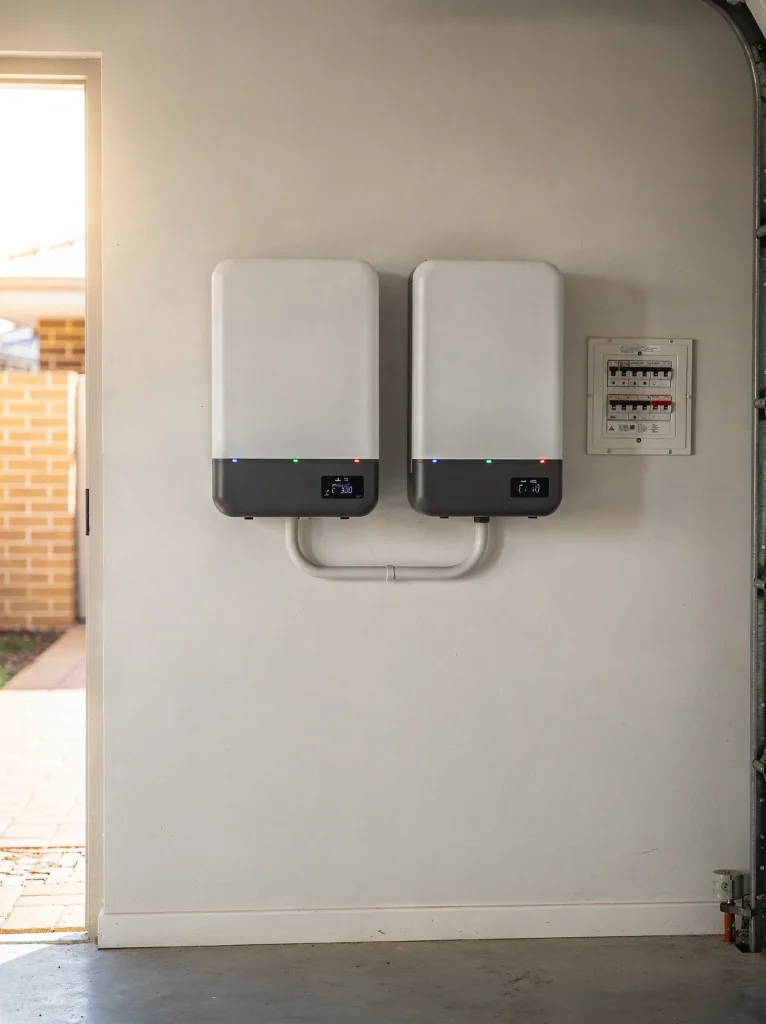
Many Perth homeowners installing solar and storage together assume a single discount comes off the whole system. In reality, two separate incentive layers apply to different parts of the same installation, and they interact in a specific order. Getting the stacking right matters for your budget, which is why quotes for battery storage for your solar system are structured so both layers are captured cleanly on eligible systems.
The short version: one incentive discounts your solar panels, and a separate incentive supports your battery. They are not the same scheme, they do not overlap, and they are calculated on different line items. Let’s break down each one and then see how they combine.
What STCs Actually Are and Why They Discount the Panels
Small-scale Technology Certificates, or STCs, are a federal mechanism tied to the solar generation part of your system. When you install eligible photovoltaic panels, your system is deemed to produce a certain amount of clean energy over a set period, and that generation is expressed as a number of certificates.
Those certificates carry a tradeable value. In practice, most homeowners never touch a certificate directly. Instead, they assign the STCs to their installer, who applies the value as an upfront discount on the panel portion of the quote. This is why STCs reduce the cost of the solar array itself, not the battery.
The key point: STCs are attached to generation capacity. A battery stores energy, it does not generate it, so the STC calculation looks only at the panels.
What Battery-Specific Rebates Apply To
Battery incentives sit in a completely separate layer. These programs are designed to support the storage component of a system, so they attach to the battery rather than the panels.
Because storage is treated as its own category, the battery rebate is calculated against the storage hardware and its capacity, not against how much solar you are generating. That separation is exactly why the two incentives can appear on one quote without clashing. If you want a broader view of whether storage stacks up for your household, our earlier discussion on whether a home battery is worth it is a useful companion read.
How the Two Stack on a Combined Quote
On a solar-plus-battery quote, each incentive comes off a different line item, and they apply in sequence:
- The STC value is deducted from the solar panel portion of the system.
- The battery rebate is deducted from the storage portion of the system.
- The two reductions are then combined to arrive at the net figure you pay.
Because the discounts target separate hardware, they add together rather than compete. You are not choosing between them, and one does not reduce the value of the other. A well-structured quote will show these as distinct reductions so you can see exactly where each saving lands.
A Worked Walk-Through of a Combined System
Imagine a typical combined installation. The quote begins with a total for the full system: panels, inverter, battery and installation.
First, the installer calculates the STCs based on the size of the solar array and the deeming period. That certificate value is applied as a discount against the solar and inverter portion. The panel cost drops accordingly.
Next, the applicable battery rebate is applied against the storage portion. This is a separate reduction, calculated on the battery, and it comes off after the solar side has already been discounted.
The result is a single net price that reflects both layers. Neither reduction cancels the other out, because each one only ever touches its own part of the system.
Common Misconceptions
A few myths trip people up when they compare quotes:
- You cannot double-dip. Each incentive applies once, to its own component. The battery rebate does not extend to the panels, and STCs do not extend to the battery.
- System size affects STC value. A larger, eligible solar array is deemed to generate more, so it attracts more certificates. The battery rebate, by contrast, follows the storage capacity rather than the panel size.
- Timing can matter. Installing solar and a battery together on one job lets both incentives be captured on a single, coordinated quote. Splitting the work across separate installations can complicate the paperwork and change how each layer is claimed.
The takeaway is that these are two independent systems working side by side, not a single pool of savings you have to divide.
How Installers Handle the Paperwork
The mechanics behind the scenes are what make the upfront discount possible. For STCs, the installer typically manages the certificate creation and assignment so the value can be passed straight to you as a point-of-sale reduction. You do not usually wait to be reimbursed for this part.
For the battery layer, the installer confirms the storage hardware meets the relevant program requirements and prepares the supporting documentation. When both processes are handled together on an eligible combined system, you see the net figure reflected at the quoting stage rather than chasing rebates after installation.
This is where working with an installer who understands both layers pays off. A clear quote separates the solar discount from the storage discount so you know precisely what each incentive is doing.
Upfront rebates and STCs are only half the value story, though. Once your battery is installed, the ongoing return depends heavily on what happens to the energy it stores and exports. In Western Australia, the way electricity buyback arrangements treat exported solar reshapes the ongoing maths of owning a battery, and that is the side of the equation worth understanding before you commit.