
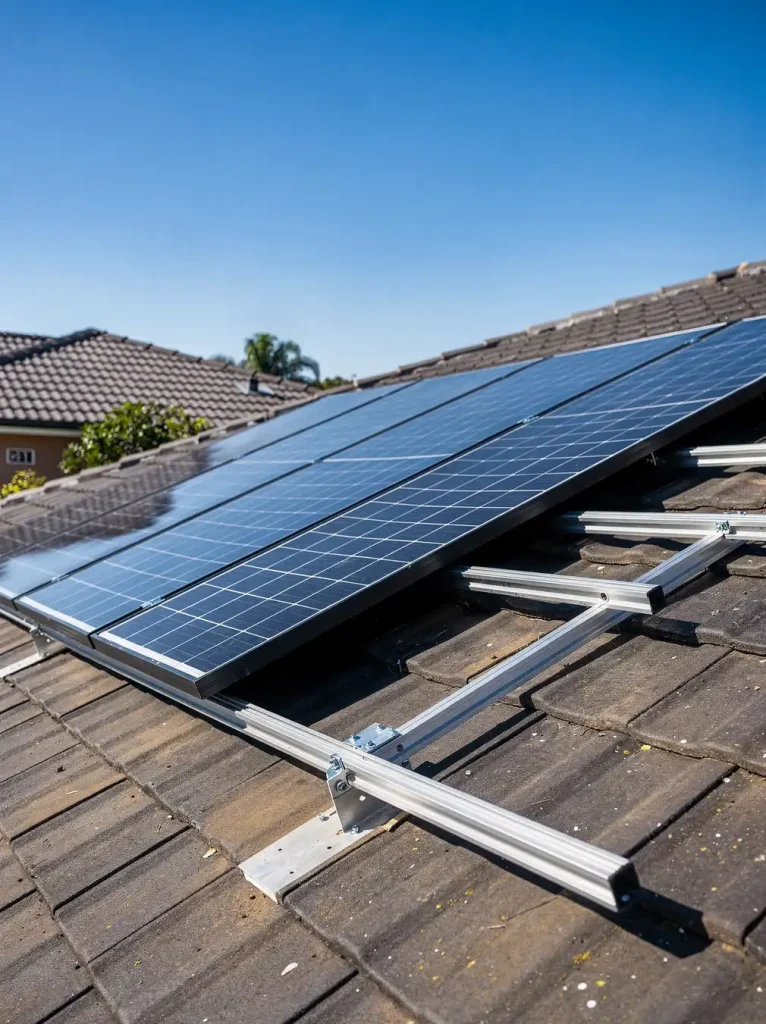
Perth ranks among the sunniest capital cities in Australia, and that abundant sunshine is exactly why solar panels in Perth tend to perform so strongly across the metro area. But sunshine hours alone don’t tell the full story. The way heat, ultraviolet load, salt-laden breezes and seasonal weather interact with your panels determines how much energy you actually capture day to day. Climate, in other words, is the master variable that every other decision has to respond to.
Perth’s Solar Resource and Why the Local Climate Is So Favourable
Perth receives a high number of clear-sky days each year, with a long, dry summer and comparatively mild, short winters. This gives the region strong solar irradiance — the amount of solar energy landing on a given surface — for much of the calendar.
Compared with the more cloud-prone eastern capitals, Perth’s stable high-pressure summers mean fewer overcast interruptions during peak generating months. That consistency is a genuine advantage. A well-planned system here spends more hours in productive sunlight than an equivalent system in many other parts of the country.
Still, high irradiance is a starting point, not a guarantee. What happens to that energy once it reaches your panels depends heavily on temperature, panel condition and the air itself.
The Heat Paradox: Why the Hottest Days Aren’t Always the Best
It seems logical that the brightest, hottest days would produce the most power. In practice, extreme heat works against panel efficiency. Solar panels are rated at a standard cell temperature, and their output drops as they heat beyond that point.
On a searing Perth afternoon, roof-mounted panels can climb well above the surrounding air temperature. The result is a measurable efficiency loss precisely when the sun is at its strongest. This is the heat paradox: a 42-degree February day may generate slightly less per panel than a clear, cooler day with the same sunlight.
It doesn’t mean summer is unproductive — far from it. It simply means the long daylight hours do much of the heavy lifting, while peak temperatures shave a little off the top. Good installation practice allows for airflow beneath panels to help manage this.
UV Intensity and Long-Term Output
Perth’s ultraviolet load is intense, and that same UV that powers generation also ages materials over time. Quality panels are built to withstand harsh light, but no material is entirely immune to prolonged exposure.
Over the life of a system, panels gradually lose a small percentage of their rated output each year — a process called degradation. In a high-UV environment, choosing components engineered for durability matters more than in milder climates. Mounting hardware, cabling insulation and sealing all face the same relentless sun and should be specified accordingly.
The practical takeaway is that longevity is a Perth-specific consideration. A system that performs beautifully in year one should also be built to hold its ground across decades of strong light.
Coastal and Airborne Factors: Salt and Dust
Where you live in the Perth basin changes the equation. Homes near the coast contend with salt-laden sea breezes that can settle on panels and hardware, contributing to corrosion risk over time if components aren’t rated for marine conditions.
Inland and eastern suburbs face a different challenge. Hot easterly winds carry fine dust that coats panel surfaces, and even a thin film reduces how much light reaches the cells. During the long dry stretch, there’s little rain to rinse panels clean.
These factors influence maintenance more than design, but they’re worth planning for:
- Coastal properties may need corrosion-resistant mounting and framing.
- Dust-prone areas benefit from occasional cleaning during the dry season.
- Both conditions make accessible, well-positioned panels easier to maintain.
Seasonal Generation Patterns Across the Year
Perth’s generation curve follows its climate closely. Summer delivers the longest days and the most total energy, despite the heat penalty on peak output. Winter brings shorter days and the region’s wet season, with more cloud and lower sun angles reducing daily yield.
The encouraging part is that Perth’s winters are mild and comparatively brief. Even in the cooler months, clear days remain common, so the seasonal dip is less severe than in southern or eastern states. Households should still expect noticeably higher production between spring and autumn, and plan energy use with that rhythm in mind.
Understanding this pattern helps set realistic expectations. A system isn’t underperforming in July simply because it produces less than in January — it’s responding exactly as the season dictates.
Designing a System That Works With the Climate
Everything above points to a single principle: a Perth solar system should be designed around local conditions rather than a generic template. That means accounting for heat management, UV durability, salt or dust exposure, and the seasonal shape of demand and supply.
A system sized and specified for another climate won’t behave the same way here. The most reliable results come from matching components and layout to the exact conditions a rooftop faces — the sun it receives, the air it breathes and the temperatures it endures.
Knowing the climate your panels must contend with is only the first step, though. Once those conditions are clear, the next lever within your control is far more hands-on: the physical positioning of the panels on your roof and which direction they should face to capture Perth’s abundant, climate-shaped sunlight most effectively.