
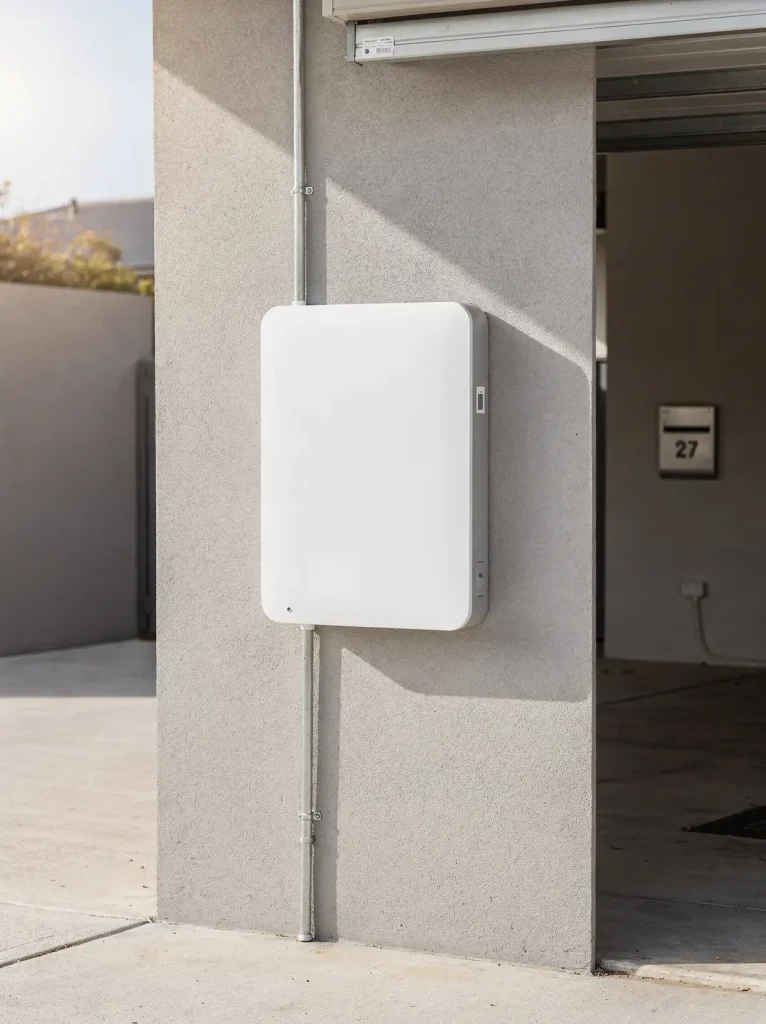
Is 2026 the year to finally add a battery? It is the question a lot of Perth households are asking, especially those already sending solar exports back to the grid for very little in return. The real savings tend to compound when you pair storage with a solar array, so many homeowners are weighing up solar battery storage as an addition to an existing or newly installed solar system. The federal Cheaper Home Batteries Program is a big reason that conversation has picked up.
What the Cheaper Home Batteries Program Is and Why It Launched
The Cheaper Home Batteries Program is a national initiative designed to bring down the upfront cost of installing a home battery. It extends the same style of support that has helped millions of Australians put solar panels on their roofs, now applied to storage.
The reasoning is straightforward. Rooftop solar has been hugely successful, but a lot of that energy is generated in the middle of the day when household demand is low. Without a battery, surplus power is exported for a modest return. Storage lets households keep more of their own solar and use it in the evening when grid electricity is most expensive. The program aims to make that shift affordable for ordinary homes rather than just early adopters.
How the Discount Is Calculated and What to Expect in 2026
The discount is tied to the usable storage capacity of the battery you install, measured in kilowatt-hours. In simple terms, the larger the eligible battery, the larger the total discount, up to a capped amount of capacity that qualifies.
For a Perth homeowner in 2026, the important thing to understand is that this support is not a rebate you have to chase after the fact. It is calculated based on your battery’s capacity and applied to reduce what you pay up front. The exact figure depends on the system you choose and its certified usable capacity, so two households installing different batteries will see different reductions.
Because the discount scales with capacity, sizing the battery sensibly for your household’s evening usage matters. A battery that is too small leaves savings on the table, while one that is far larger than you need may not pay its way even with the discount applied.
Why Perth’s Sunshine Makes Storage Particularly Worthwhile
Western Australia enjoys some of the best solar conditions in the country. Perth’s long stretches of clear, sunny days mean a well-placed rooftop array generates plenty of surplus energy through the day, often more than the home can use while everyone is out.
That surplus is exactly what a battery is designed to capture. In a sunnier climate, a battery tends to reach full charge more reliably and more often, which means more evenings running on stored solar instead of grid power. The stronger your daytime generation, the more work the battery does, and the more value the program’s upfront discount delivers over time.
For many Perth homes, the combination of abundant sunshine and a reduced upfront cost changes the timeline on which a battery starts to make financial sense.
What the Program Covers and What It Does Not
It helps to be clear about the boundaries of the program so there are no surprises.
- It reduces the upfront cost of an eligible battery based on its usable capacity.
- It applies to new battery installations, including batteries added to an existing solar system.
- It does not replace the need for a properly designed and safely installed system.
- It does not dictate your system sizing for you, which should reflect your household’s usage patterns.
- It is not an ongoing payment or a guarantee of future savings, which depend on how you use your stored energy.
Installation quality, correct sizing, and ongoing support all sit outside the discount itself. These are decisions you make with your installer, and they have a big influence on how much value you ultimately get from the storage.
Why 2026 Timing Matters
The program is structured so that the value of the discount is generous at the outset and steps down gradually over the coming years. In practical terms, the per-kilowatt-hour support available in 2026 is higher than what will be on offer later in the decade.
That does not mean you should rush into a poorly planned installation. But it does mean the arithmetic for a well-designed battery is more favourable now than it is likely to be down the track. Homeowners who have already been considering storage have a clear reason to plan their installation sooner rather than delaying for several years.
The declining schedule is deliberate. It rewards households that move while the support is strongest and encourages the storage market to mature over time.
The federal discount is only one layer of support available to households here. Western Australia runs its own state-level battery scheme with separate eligibility conditions and a distinct claiming process, and the two can be combined for greater savings. Understanding the WA state scheme’s rules and how to qualify is the natural next step for any Perth homeowner weighing up storage in 2026.