
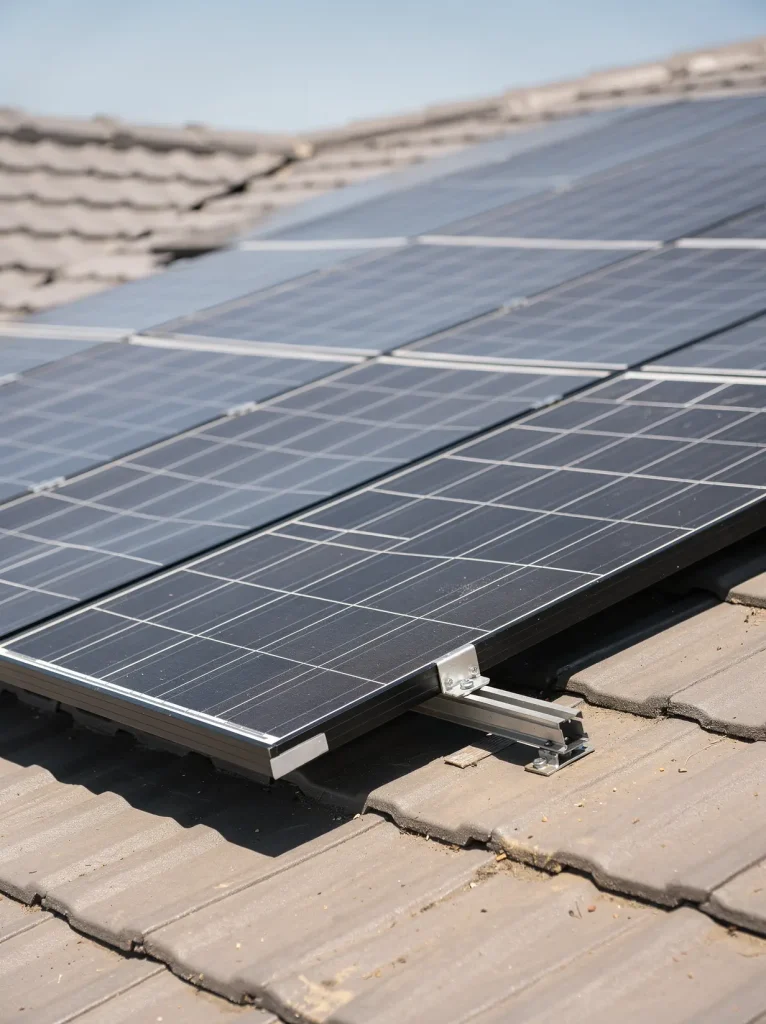
One question comes up again and again from homeowners weighing up solar: what does SAA accreditation really mean, and why does it matter? It is easy to see the letters in a quote and assume they are just paperwork. In practice, working with SAA-accredited solar installers Perth households can trust is the foundation of a system that is safe, compliant and eligible for government incentives. Getting clear on accreditation early helps you weigh your options for solar panels in Perth with genuine confidence rather than guesswork.
This article focuses on one thing only: the accreditation credential itself. What it is, who runs it, what an installer has had to prove to earn it, and how you can check it before you sign anything.
What SAA Accreditation Is and Who Runs It
SAA stands for Solar Accreditation Australia, the national body that operates the accreditation scheme for solar designers and installers. If you looked into solar a few years ago, you may remember the Clean Energy Council running this role. That changed: the Clean Energy Regulator announced SAA as the Accreditation Scheme Operator on 29 February 2024, and the scheme fully transitioned from the Clean Energy Council to Solar Accreditation Australia on 29 May 2024.
So if you still hear people talk about “CEC accreditation,” they are referring to the earlier arrangement, because the scheme is now administered by SAA. Designers and installers working on grid-connected and related systems must be accredited by SAA.
Why Accreditation Matters for Perth Homeowners
Accreditation is not simply a quality badge. It is tied directly to the financial incentives most Perth households rely on. Any individual who wishes to design or install Grid Connected Photovoltaic Systems, Grid Connected Battery Storage or Stand-alone Power Systems must be accredited under the SAA scheme to be eligible for small-scale technology certificates, commonly known as STCs.
Those certificates are what reduce the upfront cost of a system for most homeowners. On top of that, many state-based rebate programs require the installer to be an Accredited Person. In some states and territories, the law requires accreditation for all solar installers. The practical takeaway for WA homeowners is simple: if the person designing or installing your system is not accredited, your eligibility for incentives can be at risk.
What an Accredited Installer Has Had to Prove
Accreditation is earned, not bought. To become accredited with SAA, an applicant must supply photo identification, a selfie and a copy of their training certificate. The identity checks are there to make sure the person on the certificate is the person doing the work.
For installation accreditation specifically, the requirements go further. Individuals seeking installation accreditation also need to supply:
- Their electrical licence number, including its expiry date
- Working Safely at Heights certification
- A Public Liability Insurance Certificate of Currency, including its expiry date
Each of these matters on a real Perth roof. The electrical licence confirms the installer can legally and safely handle the wiring. Heights certification addresses the obvious risk of working on a pitched roof. Public liability cover protects you if something goes wrong on your property.
The Classes of Accreditation Explained
Accreditation is not one-size-fits-all. For each class of technology, the types of accreditation that can be held are Design Only, Install Only, or Design and Install. Understanding the difference helps you confirm the person quoting you is actually accredited for the task in front of them.
- Design Only covers the engineering and specification of the system, matching components, layout and output to the property, without physically installing it.
- Install Only covers the physical installation and connection of a system that has already been designed by an accredited designer.
- Design and Install covers both, where the same accredited person is responsible end to end.
These classes apply across the technology types, including grid-connected PV, battery storage and stand-alone power systems. If your project involves a battery, for example, it is worth confirming the accreditation covers that technology and not just rooftop panels.
How to Verify a Perth Installer’s Accreditation Before Committing
Checking accreditation takes only a little effort and is well worth it before you commit. Focus on three things:
- Confirm the accreditation is current. The electrical licence and insurance details behind an application carry expiry dates, so paperwork that looked fine last year is not proof it is current today.
- Match the class to the work. If someone is both designing and installing your system, they should hold the right class for both. If a battery is part of the plan, the accreditation should cover that technology.
- Check the name matches. Accreditation attaches to an individual. Make sure the accredited person is actually involved in your job, not just listed on company marketing.
Asking these questions is reasonable, and a reputable installer will answer them readily. This is also one of the first checks worth running when you are weighing up which installer to choose in Perth.
Accreditation Versus Everyday Workmanship
Here is the nuance worth holding onto: accreditation is the floor, not the ceiling. It proves an installer has met the baseline requirements to work legally and claim incentives on your behalf. It does not, on its own, guarantee that every cable will be run tidily or that every bracket will be positioned for the long term.
Think of accreditation as the entry ticket. It filters out anyone who should not be touching your system at all. From there, the quality of the actual installation comes down to care, experience and attention to detail on the day. Both matter, and the credential simply ensures you are starting from a safe, compliant baseline.
Once you have confirmed your installer holds current accreditation and the right class for the job, the natural next step is understanding what the installation itself will involve, so you know what to expect when the crew arrives and sets up at your property on the day. With the credential verified, you can turn your attention to that hands-on part of the process with far less uncertainty.