
You have chosen your installer, signed off on the design and understood how the whole process fits together. Yet plenty of Perth homeowners still feel a flutter of uncertainty about the one day that matters most: the day the crew actually shows up. If you want the wider overview of every stage from first quote to switch-on, our solar panel installers handle that end-to-end journey. This article zooms right in on the single day the work happens in and around your home.
Before the Crew Arrives
A little morning prep makes everything run more smoothly. Crews usually arrive early, often between 7am and 8am, to beat the heat of a Perth afternoon. The more access they have on arrival, the faster they get moving.
A few simple things help the day start well:
- Clear the driveway and street frontage so vehicles can park close and unload ladders, rails and panels.
- Make sure the roof is reachable – move trampolines, garden furniture or anything blocking a clean ladder set-up.
- Provide clear access to your meter box and switchboard, and clear the wall space near where the inverter will sit.
- Keep pets secured indoors or in a separate area, since gates will be opening and power will be switched off.
If your panels sit in the roof cavity or the installer needs internal access, be ready to point out the manhole and switchboard early.
Crew Arrival and Safety Setup
The first half hour is rarely about panels. It is about setting up safely. Working at height on a Perth roof carries real risk, and a professional crew treats the first stage seriously before anyone climbs up.
Expect the team to run through a short site briefing, walk the perimeter and set up edge protection or harness anchor points. They will position ladders, lay down ground protection and stage the equipment where it can be lifted efficiently.
At some point the crew will isolate power to the property. This is a mandatory safety step so electrical work can happen without live circuits. A qualified installer will confirm the isolation before touching any wiring, which is one reason the standards behind the trade matter so much – as we explained in our guide to what accredited installers bring to the job.
Panel Mounting and Rail Installation
With safety set, the mounting work begins. This is usually the longest visible part of the day. The crew fixes mounting brackets to the roof structure, then attaches the aluminium rails that the panels sit on.
How the brackets fix down depends on your roof – tiles are lifted and brackets are secured to the rafters or battens, while metal roofs use clamps or fixings suited to the sheet profile. Once the rails are level and aligned, panels are carried up and laid across them one by one, then clamped into position.
You will hear drilling, footsteps and the occasional call between crew members on the roof and the ground. It sounds busy, but it is a methodical process.
Inverter and Wiring Work
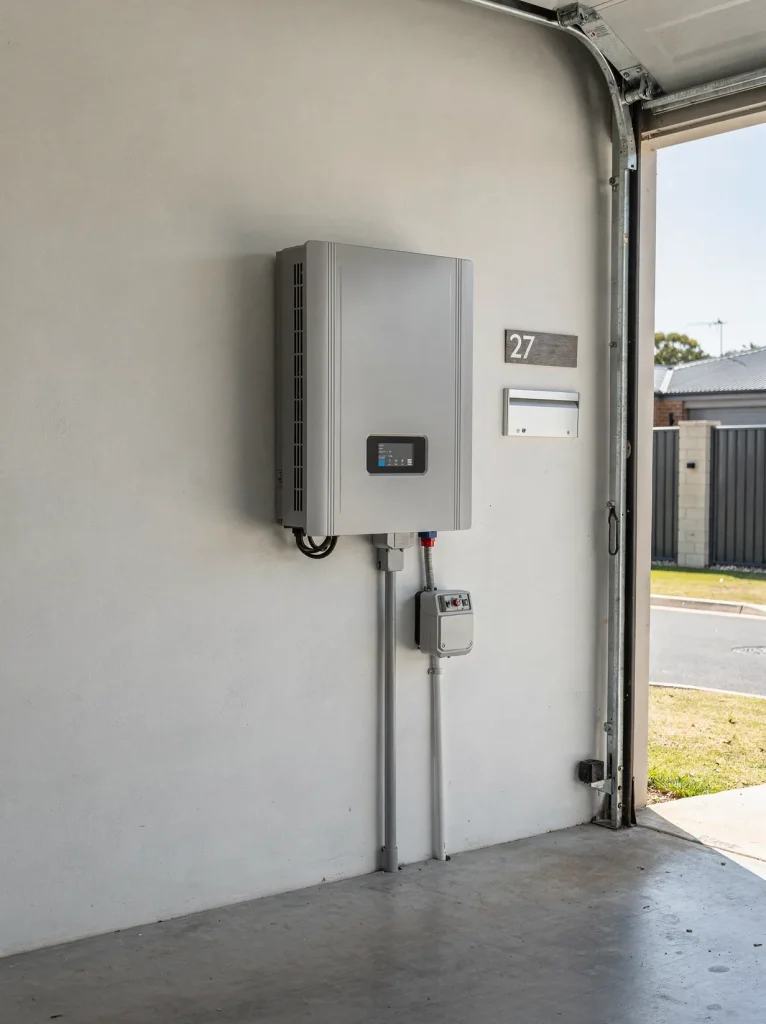
While part of the crew works on the roof, the electrical side takes shape below. The inverter is mounted to a wall – commonly in a garage, on a shaded external wall or in a plant area where it stays cool and accessible. Perth’s summer heat means installers avoid west-facing walls in full afternoon sun wherever possible.
Cabling then runs from the panels down to the inverter, and from the inverter through to your meter box and switchboard. The crew keeps cable runs tidy and protected, using conduit where cables are exposed. This wiring stage links the roof array, the inverter and your home’s electrical system into one working setup.
Testing, Commissioning and Switch-On
Once mounting and wiring are complete, the system is tested before anyone signs off. The installer checks connections, confirms voltages, verifies the inverter powers up correctly and runs through the commissioning steps the equipment requires.
After the checks pass, power is restored to the property and the system is switched on. The installer should then walk you through a short handover, covering:
- How to read the inverter display and any monitoring app.
- Where the solar isolators are and how to safely shut the system down.
- What the indicator lights mean during normal operation.
- The paperwork and compliance documentation completed on the day.
Take a moment during this walkthrough to ask questions. It is the easiest time to clarify anything while the crew is still on site.
Timeframes and Disruptions to Expect
A straightforward residential install in a Perth home often takes most of a single day – roughly six to eight hours from arrival to switch-on. Larger systems, difficult roof access or multi-storey homes can push the work longer or occasionally into a second day.
The main disruption you will notice is the power interruption. Your electricity will be off for part of the day while the electrical work happens, typically a few hours rather than the entire shift. It is worth planning around this – unplug sensitive devices, and think ahead about anything in the fridge or freezer if the outage runs long on a hot day.
Noise, movement on the roof and crew coming and going are all normal. By late afternoon, most homes are back to full power with a working solar system overhead.
How smoothly your install day actually runs depends heavily on what the crew is working with above their heads. A simple single-storey metal roof mounts quickly, while tiles, steep pitches or complex structures change the fixing method and stretch the timing. Understanding how your particular roof shapes the installation is the natural next thing to consider before the crew arrives.