
Once a Perth homeowner decides to go solar, the very first question is usually the same: how soon will it actually be running? The honest answer is that it depends on several stages, and most of them are handled for you by the Perth solar installers who coordinate the whole process. Understanding what happens at each step makes the wait far easier to plan around.
Before you weigh timing, it helps to have settled on the kind of system you want, since the choice between a grid-connected, hybrid or off-grid setup can affect which approval steps apply. With that decided, here is how the timeline generally unfolds.
Enquiry and Initial Consultation
The journey starts when you make contact and share some basic details about your property. This usually includes your address, roof type, a rough idea of your energy use, and whether you’re considering battery storage. Much of this can be gathered over a phone call or online form.
From here, a property assessment is arranged. In the Perth metro area this can often be booked within a few days, sometimes sooner during quieter periods. This first stage is quick because it’s mostly about gathering information and understanding what you’re looking for.
Site Assessment and System Design
The site assessment is where the detail begins. A technician inspects your roof to check its condition, pitch and available space. They look at orientation, note any shading from trees or nearby buildings, and confirm the switchboard and meter arrangement.
These findings feed into a tailored design. Rather than a one-size-fits-all layout, the panel positions and system configuration are matched to your specific roof and goals. A proposal typically follows within a few days of the assessment, depending on how complex the property is.
Paperwork and Approvals
This stage is where the timeline becomes less predictable, because parts of it sit outside the installer’s direct control. Before a system can connect to the grid, a network connection application must be lodged with the WA network operator.
Several things happen during this window:
- The connection application is submitted and reviewed for approval to export.
- Any meter changes are arranged, since a suitable bidirectional meter is needed to measure both what you draw and what you send back.
- Documentation is prepared to meet the relevant standards and rebate requirements.
Approval waiting periods vary. Some come back promptly, while others sit in a queue for a couple of weeks or longer. A good installer manages these submissions on your behalf and keeps you informed, but they cannot force the queue to move faster.
Scheduling and Installation Day
Once approvals are in place and your panels and equipment are ready, an installation date is booked. The physical install is often the fastest part of the whole process, which surprises many homeowners.
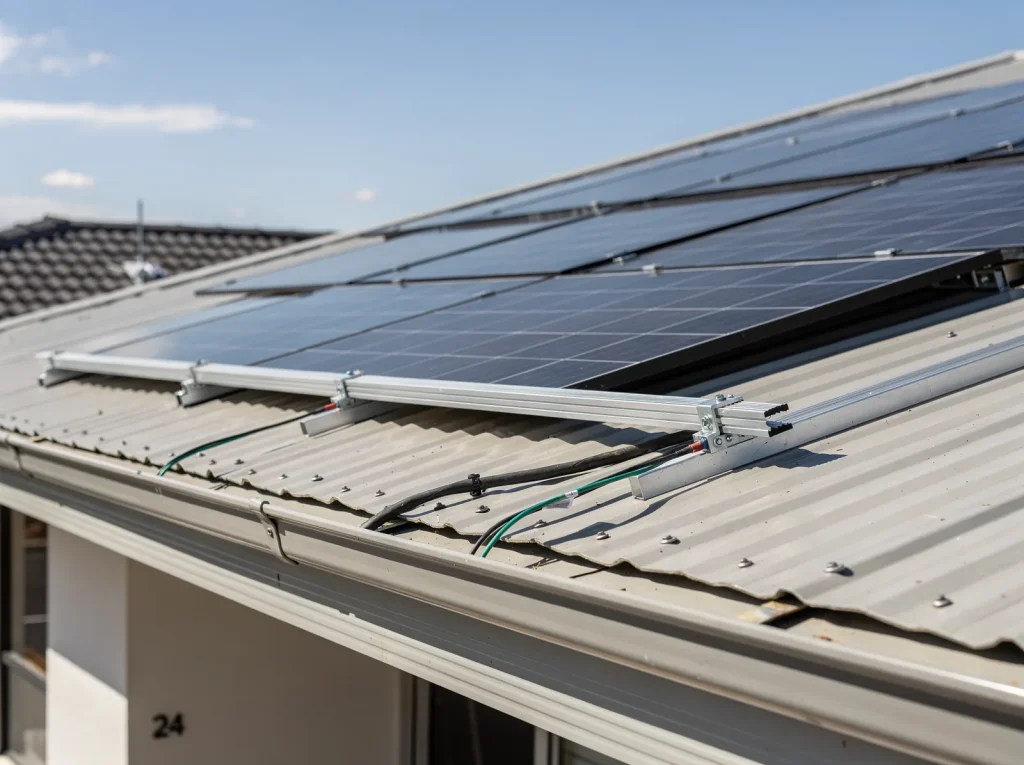
On the day, the crew mounts the roof racking, secures the panels, installs the inverter, and runs the wiring back to your switchboard. Most standard residential systems in the Perth metro area are completed within a single day, with larger or more complex roofs sometimes running into a second day.
The work is carried out by licensed electricians and accredited installers who follow safety and compliance requirements throughout. By the end of installation day, the hardware is in place, even though the system isn’t yet exporting.
Inspection, Grid Connection and Activation
There is often a gap between the panels going up and the system actually switching on. After installation, the work may need to be inspected and the final connection paperwork processed before the system is cleared to operate and export to the grid.
In some cases a meter reconfiguration or replacement has to be completed by the network before activation can happen. This is a common reason for a delay of days or occasionally a few weeks after the physical install. Once everything is signed off, the system is energised and begins generating and exporting.
What Speeds Up or Slows Down the Timeline in Perth
Several factors shape how long the overall process takes across the Perth metropolitan area:
- Roof complexity: Simple single-storey tile or tin roofs are quicker to assess and install than multi-storey or heavily shaded properties.
- Meter type: If your existing meter needs replacing or reconfiguring, activation can wait on the network’s schedule.
- Approval queues: Connection application processing times fluctuate with demand and are outside the installer’s control.
- System type: Setups involving batteries or more advanced configurations can involve extra approval steps.
- Weather: Wet or unsafe conditions can push an installation date back, since roof work needs safe access.
Taken together, a straightforward job can move from enquiry to activation in a matter of weeks, while more complex situations or slow approval queues stretch it out further. Clear communication at each stage is what keeps expectations realistic.
Switching the system on is really the beginning, not the end. Once your panels are exporting, your attention shifts to confirming the system performs as it should day to day. Knowing which figures and signals to keep an eye on after switch-on is how you verify your investment is doing its job, which makes tracking your system’s performance after activation the natural next thing to understand.