
Once you understand how storing solar energy actually works, the next real decision is the chemistry that sits inside the battery. This is where the debate over lithium iron phosphate vs lithium ion batteries becomes genuinely useful, because the two behave differently in heat, over years of daily cycling, and at end of life. If you have already worked through the basics of how a storage system charges and discharges, choosing the right chemistry is the logical next step when selecting home battery storage in Perth for your property.
Neither chemistry is simply “better”. Each trades one strength for another, and the sensible choice depends on your home, your climate and how you plan to use the system.
What the Chemistries Actually Are in Lithium Iron Phosphate vs Lithium Ion Batteries
Both are forms of lithium-ion battery. The difference lies in the cathode, the material lithium ions move into and out of as the battery charges and discharges. The GoodWe Battery (Lynx) is one option we install. The Lynx range covers modular wall and tower batteries for GoodWe inverters, from a 5 kWh wall unit to a 28.8 kWh tower.
Lithium iron phosphate, written as LiFePO4 or LFP, uses an iron phosphate cathode. It is a well-regarded cathode material known for consistent cycling, even at high rates, and it has been adopted in power tools and electric vehicles.
Conventional lithium-ion batteries instead use cathodes based on nickel and cobalt oxide blends. These metal-oxide formulations store a lot of energy in a compact space, which is why they became the default in portable electronics and early electric cars.
So when people compare the two, they are really comparing an iron phosphate cathode against a nickel/cobalt-oxide one. That single material difference drives almost everything that follows.
Thermal Stability and Safety
Thermal behaviour is where iron phosphate earns its reputation. Its cathode is chemically more stable at elevated temperatures, which makes it more resistant to overheating and the runaway reactions that can affect less stable chemistries.
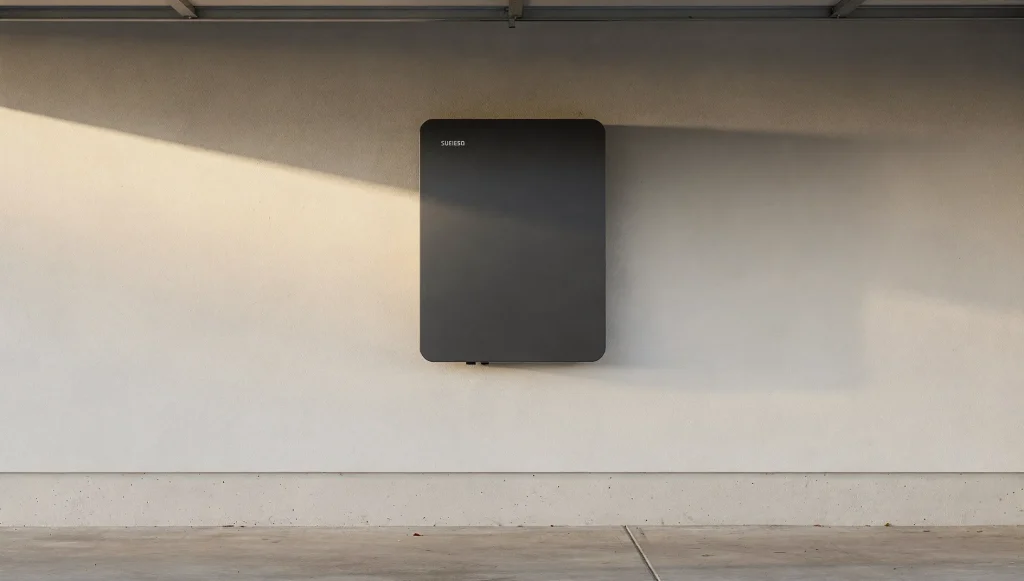
For a battery mounted on a wall in a garage or against an external wall, that stability matters. Perth summers push ambient temperatures high, and a chemistry that tolerates heat with a wider safety margin is reassuring in a home environment.
Nickel/cobalt-oxide blends are safe when managed properly, but they rely more heavily on cooling, careful cell design and battery management systems to stay within a safe window. In the heat of a WA summer, the inherent stability of iron phosphate is a genuine advantage for many households.
Cycle Life and Durability
A home battery is cycled almost every day, charging from solar during daylight and discharging into the evening. Over years, those cycles add up, so durability is central.
Iron phosphate is valued for consistent cycling performance, holding up well through repeated charge and discharge even at higher rates. That translates into steady behaviour over a long service life, which suits the daily rhythm of solar storage.
Conventional lithium-ion chemistries cycle reliably too, but their performance can degrade differently over time and tends to be more sensitive to heat and deep, repeated use. For a battery expected to work hard every single day, the long-term consistency of iron phosphate is a strong point.
Energy Density and Footprint
This is where conventional lithium-ion pulls ahead. Nickel/cobalt-oxide blends pack more energy into a smaller, lighter package, giving them higher energy density.
Iron phosphate prioritises stability over density, so an LFP unit storing the same amount of energy is usually a little larger and heavier. One of its known technical limitations is lower intrinsic electrical conductivity, which manufacturers address through techniques such as adding carbon during production or applying a carbon coating.
For most homes with a spare patch of wall, the extra size is a non-issue. Where space is genuinely tight, the compactness of a higher-density chemistry can tip the balance.
Environmental Impact and End-of-Life
Sustainability is increasingly part of the decision, and the two chemistries differ here as well.
- Iron phosphate avoids cobalt, a metal tied to significant ethical and supply concerns, which is a meaningful mark in its favour.
- Recovering value from spent iron phosphate batteries is challenging, partly because the extraction efficiency and selectivity for valuable metals can be relatively low.
- Research has shown that selective leaching can recover lithium from spent LFP batteries at high purity, and work continues on improving these recycling routes.
- Next-generation materials, including LFP and related lithium manganese iron phosphate, are being developed to lift energy density while keeping costs down.
Conventional lithium-ion batteries carry higher-value metals that can be attractive to recover, but their reliance on cobalt remains a sustainability concern. Both chemistries can be recycled, and recovery processes keep improving across the industry.
Matching Chemistry to the Property
The right chemistry comes down to how you will actually use the battery and where it will live.
- Daily home backup and solar self-consumption: iron phosphate suits steady, everyday cycling in a warm climate, favouring stability and longevity.
- High-draw loads or demanding use: consistent performance at higher rates makes iron phosphate a dependable all-rounder, though conventional lithium-ion can also be configured for heavy draw.
- Tight or indoor spaces: where every centimetre counts, the higher energy density of a nickel/cobalt-oxide chemistry can be the deciding factor.
For many Perth homes, the combination of heat tolerance and long cycle life nudges the decision toward iron phosphate. But the final call should always reflect your space, your energy habits and your priorities.
Chemistry, though, is only half the decision. Two batteries sharing the same chemistry can behave very differently once you look at how much of their stated capacity you can actually use and how deeply you can drain them each day. Learning to read the figures printed on a battery’s datasheet, and understanding usable capacity and discharge limits, is what turns a chemistry choice into a confident purchase. The SigenStor is one option we install. A stackable battery system that pairs an Energy Controller with 1 to 6 modules, suited to homes wanting backup and room to grow later.