
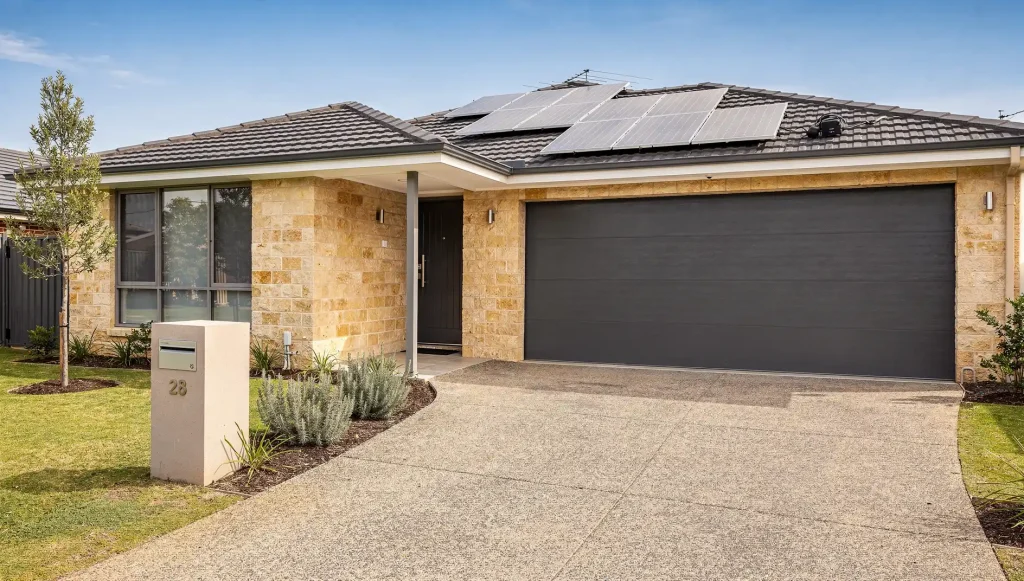
Most people reach this point after they have already settled on a rough system size. The next question is not how many panels you need, but which kind of panel to put up there. That is where the debate over monocrystalline vs polycrystalline solar panels begins, and it sits inside the broader decision of planning your home solar panel systems. If you are still working out how large your array should be, our guide to sizing a home solar system covers that ground. Here, the focus is purely on panel type and what it means for a Perth roof.
Prefer to watch or listen?
What Crystalline Silicon Actually Is
Both panel types are built from the same base material: crystalline silicon. It is by far the dominant technology, representing around 95% of all solar cells produced globally in 2020. So when you compare the two, you are not comparing silicon against something else entirely. You are comparing two ways of forming that silicon into cells.
That shared foundation matters. It means the gap between the two types is narrower than some marketing suggests, and the right choice usually comes down to a handful of practical traits rather than one being universally “better”.
How the Two Types Are Made and How They Look
Monocrystalline cells are grown from a single, continuous silicon crystal. That uniform structure gives them a smooth, consistent dark appearance, usually black, with cells that look even across the whole panel.
Polycrystalline cells are made by melting many silicon fragments together. Because the crystals set in different directions, these cells scatter light slightly differently and take on a blue, speckled, marbled look.
On a roof, the difference is visible from the ground. Monocrystalline panels read as a clean black surface, while polycrystalline panels show that mottled blue tone. For some Perth homeowners the look is purely practical; for others it influences kerb appeal on a prominent north-facing roof.
Efficiency Compared in Practice
Efficiency describes how much of the sunlight hitting a panel is turned into electricity. Panels on the market currently sit in a broad range of around 4% to 22%, but most land in the 14% to 18% band.
Monocrystalline panels generally sit toward the higher end of that range, while polycrystalline panels tend to sit slightly lower. In real terms, a more efficient panel produces more output from the same physical footprint. So two panels of identical size can deliver different amounts of power depending on their cell type.
Why does that matter? If your roof has plenty of unshaded space, a small efficiency difference is less critical. If space is tight, higher efficiency lets you fit more output into fewer panels.
Heat and Temperature Performance in a WA Climate
This is where Perth conditions deserve extra attention. Panels lose a little output as they heat up, and that loss is described by a figure called the temperature coefficient. The smaller the number, the less a panel suffers when it gets hot.
Given the long, hot summers across WA, a roof surface can reach serious temperatures well above the air temperature below. A panel that holds its output better under heat will generally perform more consistently through a Perth afternoon.
Monocrystalline panels often carry a slightly more favourable temperature coefficient, which can show up as steadier production during the hottest part of the day. It is not a dramatic difference, but over years of summer heat it is a trait worth weighing rather than ignoring.
Cost, Value and Durability Over Time
In general terms, the manufacturing process behind monocrystalline cells is more involved, which has historically placed them at a higher price point than polycrystalline. Polycrystalline has traditionally been the more budget-friendly option. The gap has narrowed as production has scaled, so the decision is now less about cost alone and more about total value across the life of the system.
Durability is part of that value. Both types can develop microcracks in their cells, and these can enlarge over time with thermal cycling or poor handling during transport and installation. In a climate with large daily temperature swings, careful handling and quality construction help limit that risk regardless of which type you choose.
One useful quality signal is a panel’s power tolerance rating. Higher quality panels tend to carry a positive tolerance, such as ‘+5%’, meaning they are rated to perform at or slightly above their stated output rather than below it.
How to Choose for Your Perth Roof
There is no single winner. The right panel type depends on how your roof and priorities line up. Weigh these factors:
- Roof space: Limited area favours higher-efficiency monocrystalline so you get more output per square metre.
- Orientation and sun exposure: A well-oriented, unshaded roof gives either type room to perform well.
- Heat tolerance: For long, hot WA summers, a favourable temperature coefficient supports steadier midday output.
- Appearance: If a uniform black finish matters on a visible roof, that leans monocrystalline.
- Long-term reliability: Look at build quality and power tolerance, not just the cell type label.
Match these against your own situation rather than chasing a headline “best” answer. A home with abundant roof space and a tighter budget may be well served by polycrystalline, while a compact roof that needs maximum output per panel often points to monocrystalline.
Once you have settled the monocrystalline versus polycrystalline question, a deeper layer of quality still sits underneath it. Two panels of the same cell type can differ widely in manufacturing standards and grade, and that is where marketing labels start to blur the line between genuine quality indicators and sales language. Understanding how panel quality tiers and manufacturer classifications really work is the next piece of the puzzle, so you can tell a meaningful quality marker from a clever label.