
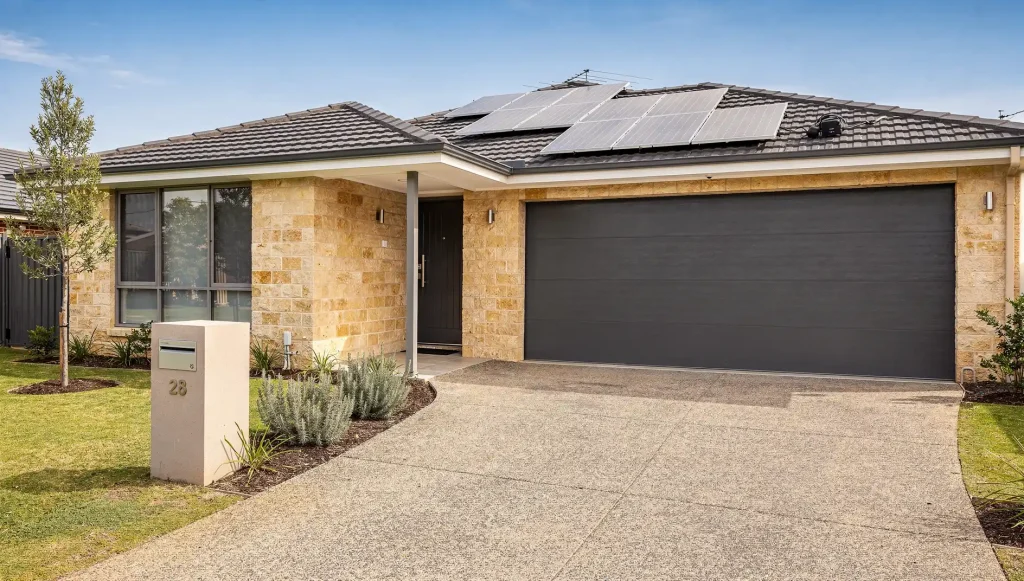
One of the first questions most people ask before going solar is simple: how many solar panels Perth households actually need to cover their power use. The honest answer is that there’s no single number, because the right size depends on how much electricity your home uses, how much roof you have, and what you want the system to do. Before you compare panel brands or design choices, it helps to get the sizing right, and that’s exactly what a well-planned installation of residential solar panels in Perth is built around. This article is the sizing foundation you work from before any other decision.
Prefer to watch or listen?
How System Size Actually Works
Solar systems are measured in kilowatts (kW), not in the number of panels. The system size is calculated by multiplying the number of panels by each panel’s rated capacity. So 19 panels rated at 350 watts each gives roughly 6.65 kW.
Why does kW matter more than raw panel count? Because panel wattage varies. Two homes could each have 20 panels but very different total capacities if the panels are rated differently. When you think in kilowatts, you’re measuring the system’s real generating ability, which is what shapes your power bill and your daily savings.
Start With Your Household Electricity Usage
The best starting point is your own consumption. On average, Australian homes use between 11 and 23 kWh per day. That’s a wide range, and where your household sits within it changes everything about the right size.
A smaller household running basic appliances sits at the lower end. A larger family home with ducted air conditioning, a pool pump, and several occupants during the day sits at the upper end. Perth summers push cooling loads up, so it’s worth looking at a full year of usage rather than a single mild month.
Dig out a recent electricity bill and find your average daily usage in kWh. That figure, paired with how much of your power you use during daylight hours, is the real input for sizing.
A Worked Example for a Perth Home
Consider a typical home with moderate daytime usage. A common setup is around 19 panels producing roughly 6.6 kW. In Perth’s strong, reliable sunshine, a system of that size generates a solid amount of electricity across the day, and more than enough to cover daytime loads for many households with some left over.
Perth enjoys more sunny days than most Australian capitals, so a system here tends to produce well across the year. The goal isn’t to match your total usage panel-for-kWh, but to generate enough during daylight that you draw far less from the grid, while using what you produce when the sun is up.
Roof Space and Practical Fit
Capacity only matters if the panels physically fit. One residential solar panel is often around 1.7 m² in area, so a 6.6 kW system of about 19 panels typically needs 29 to 32 m² of unshaded roof.
When you’re assessing your roof, keep a few things in mind:
- Orientation: North-facing roof sections generally capture the most sun across the day, with east and west faces useful for morning and afternoon generation.
- Shading: Trees, chimneys, antennas, and neighbouring buildings can cut output, so clear roof space is worth more than total roof space.
- Usable area: Vents, skylights, and roof edges reduce the space you can actually fill with panels.
If your clear, well-oriented roof is limited, that constraint can cap how large a system you install, which is another reason sizing and roof assessment go hand in hand.
Matching the Inverter and Planning for WA Connection
The inverter converts your panels’ output into usable power for the home. A 6.6 kW array is often paired with a 5 kW inverter, because panels rarely hit their full rating at once and a slightly smaller inverter can still capture most of the generation efficiently.
It’s also worth being aware of upcoming changes in Western Australia. From 1 May 2026, households on standard connections can install inverters up to 30 kVA, and single-phase connections allow an increase in allowable installed generation capacity of 15 kW. These shifts give more room for larger systems, though your own roof, usage, and connection type still set the practical limits.
Why Bigger Isn’t Automatically Better
It’s tempting to assume a larger system is always the smarter choice, but the right size balances a few factors. The most value comes from power you use yourself rather than exporting, so a system that matches your daytime habits often beats one that simply generates the most.
That said, it’s reasonable to plan ahead. If you expect to add a battery, buy an electric vehicle, or grow your household, allowing some headroom in your sizing can save reworking the system later. The aim is a size that suits how you live now while leaving sensible room for the future.
Once you’ve landed on the right capacity and panel count for your home, the next question becomes which panel will deliver that size best on your roof. Different panel technologies vary in efficiency and footprint, and that can change how many panels fit your calculated size, so it pays to understand how the main panel options stack up for Perth conditions.